No products in the cart.
 Add Kesari Weekly as a preferred source on Google


Melpattur Narayana Bhattathiri, through intense spiritual discipline, perfected his creative genius and gave poetic form to the glory of Narayana in Narayaneeyam. To complete that sacred labour, the great poet invoked into his heart the divine form of Narayana that appeared before him through Guruvayoorappan, adorning it with the anklets of poetic imagination. What the community of devotees received as a result was the “Keshadipada Varnana”—the description of the Lord from head to foot.
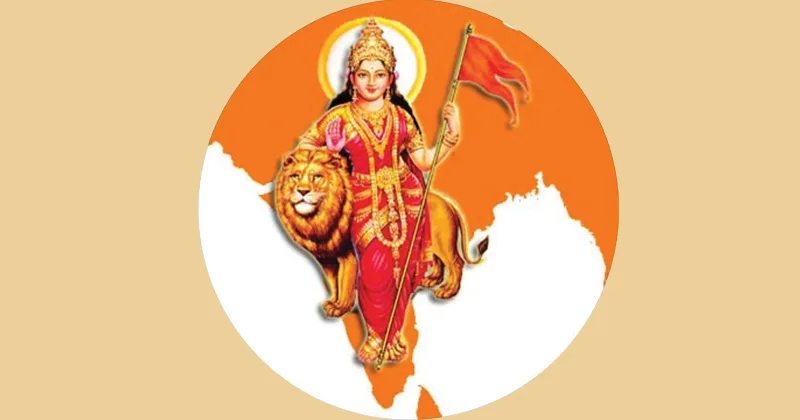
With a similar tapas-filled inner state, Bankim Chandra Chattopadhyaya absorbed into himself the beauty, strength, abundance, and richness of Mother India in all her varied dimensions, and gave poetic shape to that divine image in Vande Mataram. For those who had resolved to rush with fervour into the battlegrounds of the liberation of universal humanity through the worship of Mother Bharat, this was the sacred icon to be enshrined in their hearts.
Looking back at history, two decades after the composition of Vande Mataram, in the 1890s, Swami Vivekananda fulfilled the destiny of delivering the great call: “For the next fifty years, let Mother India be the only deity worshipped by Indians.” The natural question that arises in every Indian heart is whether Bankim Chandra’s composition of Vande Mataram was the means ordained by time itself to consecrate the divine image of Mother India in the minds of the people so that Swamiji’s exhortation could become a living practice. Sri Aurobindo, in that very era, had already provided an answer that left no room for doubt.
Three decades after Bankim composed it, when Vande Mataram became a blazing inspiration for the people’s resistance to the partition of Bengal, Sri Aurobindo wrote:
“The third and supreme service of Bankim to his nation was that he gave us the vision of our Mother… Thirty-two years ago Bankim wrote his great song and few listened; but in a sudden moment of awakening from long delusions the people of Bengal looked around for the truth, and in a fated moment somebody sang ‘Vande Mataram’. The mantra had been given, and in a single day a whole people had been converted to the religion of patriotism. The Mother had revealed herself. Once that vision has come to a people, there can be no rest, no peace, no further slumber till the temple has been made ready, the image installed and the sacrifice offered. A great nation which has had that vision can never again be placed under the feet of the conqueror…”

In his 1908 Amaravati Speech, Sri Aurobindo elevated the song as a national song and declared: “It is not a mere national anthem as European nations have theirs. It contains a mighty and sacred mantra. The author of Anandamath, to whom we may rightly give the name of an inspired Rishi, revealed it to us.” He further explained how this mantra might have been revealed to Bankim—perhaps through the teaching of a Sannyasin who was his guru. Sri
Aurobindo said this mantra was not something entirely new, but the revival of a once-lost ancient mantra that had faded due to some act of betrayal. Just as an individual possesses a gross, subtle, and causal body, so too does a nation; and Vande Mataram embodies these layers of meaning in their fullness.
The Rise of India’s Liberation Ritual Through Visionary Insight In the last three decades of the nineteenth century and the first decade of the twentieth, the stage was being set for the final struggle for India’s liberation from imperial dominations—first Islamic invasions and then Anglo-Christian colonial rule. Bankim Chandra Chattopadhyaya, through Vande Mataram in 1875, provided the divine image and foundational mantra to be enshrined in the temple of Mother India, which had to be rebuilt after centuries of subjugation. Swami Vivekananda urged that, for the next fifty years, this Mother alone should be the deity of worship. In 1908, Sri Aurobindo proclaimed that once the Mother had revealed herself, there could be no rest until her image was installed and the offering made. Thus Vande Mataram, flowing into the mainstream of India’s freedom movement, continued shaping the destiny of the nation for 150 years and more.
The Indian National Congress and Vande Mataram
Composed in 1875, Vande Mataram was first published on 7 November 1875 in Bangadarshan magazine. Bankim later included it in his 1882 novel Anandamath. This marked its powerful entry into history as a symbol of resistance and rebirth of Indian nationalism.
Its first public national presentation occurred in the 1896 Calcutta session of the Indian National Congress, where Rabindranath Tagore set it to tune and sang it. The president of that session, Rahmatullah Mohammad Sayani, was present along with many Muslim delegates But none objected to anything in the song.
However, in 1937, when Jawaharlal Nehru became Congress President, objections were raised claiming that certain parts of the song offended Muslim sentiments. Tagore himself, who had sung the full song in 1896, advised trimming it—a shift that must be understood in the political context of the time. Perhaps in 1896, the British-controlled Congress did not fully recognize the revolutionary power inherent in the song; but by the 1930s, Nehru’s conciliatory approach toward both British imperial interests and Muslim communal leaders made it less surprising that he agreed to cut down Vande Mataram or even to accept the partition of India.
As a natural outcome of the 1937 Congress Working Committee decision, independent India—under Nehru’s influence—accepted only the first two stanzas of the original song as the National Song. In the Constituent Assembly, its President, Dr. Rajendra Prasad made a statement on 24 January 1950: “Vande Mataram, which has played a historic part in the struggle for Indian freedom, shall be honoured equally with Jana Gana Mana and shall have equal status with it.”
Yet despite explicitly acknowledging its historic role, those who opposed the full song refused to accept it as the national song even after forming Pakistan and leaving India. This is a question the Indian National Congress will forever face.
Veer Savarkar, Netaji, and Vande Mataram
For Vinayak Damodar Savarkar—the prince among revolutionaries—Vande Mataram was:
● a fiery revolutionary anthem,
● a greeting among freedom fighters,
● a symbol of patriotism,
● a warning to those seeking compromise, and
● a mantra that ignited the flames of struggle.
In 1907, at the International Socialist Conference in Stuttgart, Germany, Madam Bhikaji Cama—representing Savarkar and his comrades—unfurled the first Indian national flag. Designed jointly by Savarkar, Cama, and Shyamji Krishna Varma, the flag prominently bore the words Vande Mataram, showing the song’s deep influence on Savarkar.
The impact of the song on Savarkar’s follower, the great martyr Madan Lal Dhingra, must be written in golden letters. On 1 July 1909, the twenty-four-year-old walked to the British gallows chanting Vande Mataram. His last message ended with: “…Therefore I die; glory to martyrdom! My only prayer to God is that I be reborn of the same Mother and re-die in the same sacred cause till she stands free for the good of humanity and the glory of God. VANDE MATARAM.”
During the proclamation of the Azad Hind Government led by Netaji Subhas Chandra Bose, Vande Mataram was sung with fervour. When objections were raised to parts of the song in 1937, in Congress Working Committee Netaji insisted the full song must remain the national song.
Dr. Hedgewar and Jawaharlal Nehru in the Context of Vande Mataram
Dr. Keshav Baliram Hedgewar and Jawaharlal Nehru were born in the same year (1 April 1889 and 14 November 1889). When they were students, the influence of Vande Mataram was spreading across India.
Hedgewar, already committed to reviving India’s cultural identity, was naturally drawn to the wave of nationalistic fervour the song created. Nehru, however, was devoted to becoming the perfect English gentleman—erasing his Indian identity in tastes, opinions, morals, and intellect to match Macaulay’s ideal.
In 1907–08, the cries of Vande Mataram from Bengal’s anti-partition and Swadeshi movements reached Nagpur. During a Vijayadashami seemollanghan procession, Hedgewar and his friends loudly sang Vande Mataram and addressed the crowd with fiery patriotic speeches—drawing
the attention of the police. Treason cases were planned, but intervention by community elders prevented prosecution. Yet the police kept close watch on him.
Later, during a school inspection, Hedgewar and his fellow students resolved to protest the repressive Risley Circular. When the inspector entered the classroom, the students rose and loudly sang Vande Mataram, disrupting the inspection. A probe failed to identify the leader. The students were expelled, and they left the school chanting Vande Mataram even more loudly. Hedgewar refused to accept that chanting Vande Mataram was a crime.
He continued his education at Vidya Graha, one of the national schools founded by Sri Aurobindo, Ras Bihari Bose, and Surendranath Banerjee—institutions inspired by Bal Gangadhar Tilak. Later, with Dr. Moonje’s help, he joined Calcutta Medical College. After completing his studies, Dr. Hedgewar, with Vande Mataram firmly enshrined in his heart, dedicated his life to the Motherland and founded the Rashtriya Swayamsevak Sangh (RSS). As the RSS approaches its centenary, the 150th anniversary of Vande Mataram is also being celebrated; countless swayamsevaks continue the yajna of making Mother India a Vishwaguru, marching with the Bhagwa Dhwaj and chanting Vande Bharat—the path first opened by that schoolboy expelled for singing Vande Mataram.
Now let us see what Nehru was doing at that time. Motilal Nehru embodied the Macaulayan ideal: Indian in blood and colour, but English in taste, opinions, morals, and intellect. In 1905, he sent his fifteen-year-old son Jawaharlal to Harrow in England to become a perfect English gentleman. Far exceeding his father’s expectations, Nehru grew into a thorough Englishman. In a letter dated 15 July 1910, he complained to his father: “Cambridge is becoming full of Indians.” (Reference: Dr. Koenraad Elst, Decolonisation of the Hindu Mind.)
This stands in stark contrast to the fact that, in London itself, Madan Lal Dhingra embraced martyrdom chanting Vande Mataram around the same time.
History records Dr. Hedgewar as one who fully enshrined the sacred image of Bharat Mata within his heart through the Vande Mataram ideal. But Jawaharlal Nehru is marked in history for cutting Vande Mataram in 1937 and paving the way for the partition of India in 1947.
Why did the Congress—under Nehru’s influence—cut and truncate Vande Mataram?
When the historical fact remains that the Congress, under the influence of Nehru, cooperated in the partition of India, their politics of appeasing the Islamic faction becomes even clearer with regard to the issue of the song Vande Mataram.
When we enter that discussion, we must first understand what exactly the Islamic communal
factions found “provocative” in the song. Even on that question, Maharshi Aurobindo had given his reply as early as the beginning of the nineteenth century.
Is Vande Mataram provocative to Muslims?
Maharshi Aurobindo’s answer
Once, a disciple told Maharshi Aurobindo that Islamic communalists claimed that Vande Mataram was objectionable because it referred to Hindu goddesses like Durga. Aurobindo replied:
“But it is not a religious song. It is a national song, and the Durga spoken of is India as the Mother. Why should not the Muslims accept it? It is an image used in poetry. In the Indian conception of nationality, the Hindu view would naturally be there. If it cannot find a place there, then the Hindus may as well be asked to give up their culture….” (Reference: Evening Talks with Sri Aurobindo, p. 242)
Vande Mataram: Gandhi’s observations (1905)
Since the 1937 decision was taken under the leadership of Gandhi himself, Gandhi’s views from three decades earlier are highly relevant.
On December 2, 1905, Gandhiji wrote an article titled “Heroic Song of Bengal” in Indian Opinion. In that article he described Vande Mataram as India’s national song and wrote:
“It is emotionally nobler and sweeter than the national songs of other countries. In many national songs, there are elements that insult others; Vande Mataram is entirely free from such flaws. Its aim is solely to elevate our patriotism. It sees India as the Mother and sings the Mother’s glories. The poet sees in Mother India all the virtues that one sees in one’s own mother. Just as we worship our own mother, this song is an emotional prayer to Mother India.”
Left-liberal Nehruvian intellectuals often cite an incident to glorify Gandhiji. On August 23, 1947, in a meeting attended by Gandhi, some Muslims shouted “Allah-u-Akbar,” and in response some others shouted Vande Mataram! Gandhi then stated that Vande Mataram was not a religious slogan but a political one.
But these intellectuals never bother to reflect on the real message Gandhi conveyed afterwards. Gandhi reminded the audience that Vande Mataram was not a chant to provoke Muslims; rather, it was a heartfelt devotional hymn to Mother India—an anthem that ignited the politics of Bengal and a song for which many freedom fighters suffered torture and even gave their lives.
If one tries to argue that Gandhi meant “Do not shout Vande Mataram if Muslims dislike it,” then one must also ask:
Did Gandhi ever say that chanting “La ilaha illallah, Muhammadur Rasoolullah”—a proclamation that denies every deity except Allah—reflects intolerance in a pluralistic society?
Vande Mataram — The view of a prominent Muslim freedom fighter
Even when Islamic religious extremists opposed Vande Mataram, several nationalist Muslim scholars themselves rebutted that opposition.
In his 1941 book Pakistan Examined, Maulana Reza-ul-Karim wrote:
“Let the whole world know that Indian Muslims are not a minority as the term is understood in European politics. Except for differences in religious creed, there is nothing that distinguishes a Muslim from a Hindu.”
He later published a book in 1944 titled “Bankim Chandra and the Muslim Community”. In it, he objectively analysed—and dismissed—the anti–Vande Mataram sentiments among some Muslims.
Maulana Karim (pp. 90–102) argued:
“There are some among us who, in the name of ‘idolatry,’ try to corrupt the natural flow of ordinary Muslim life. Touching the feet of parents in respect is called idolatry! Bowing to elders is idolatry! Hanging pictures for beauty in one’s home is idolatry! They say many such things are ‘anti-Islamic,’ but they cannot explain what exactly is un-Islamic. These arguments confuse Muslims and hinder the growth of free thought.”
He continued:
“Such people label even a beautiful song like ‘Vande Mataram’ as ‘communal’. But those with a broad outlook will examine the song wholly and realise that there is nothing in it that promotes idolatry.”
He further explained:
“The purpose of Vande Mataram is not to glorify idol worship. It is to present Mother India as greater than even Durga, Lakshmi, or Saraswati.”
“Why object to words like Durga, Kamala, Saraswati? These words have symbolic meaning in poetry and prayer. Comparative study of world literature shows similar imagery in many languages — including in works by Muslim writers.”
Maulana Karim asked:
“Muslim writers have used terms like ‘God of love,’ ‘goddess of music,’ ‘angel of death,’ ‘messenger of rain.’ If these metaphors do not make them idolaters, why should using words like ‘Kamala,’ ‘Durga,’ or ‘Saraswati’ make anyone an idolater?”
He finally exposed the political motive behind the anti–Vande Mataram campaign, referring to Jinnah, Muslim League leaders, and some other Muslim politicians:
“Vande Mataram has not been forbidden by the authoritative scholars of Islam. It is the Western-dressed barristers and politicians—who have never had time to even stand respectfully in a mosque—who oppose it. Those who oppose Vande Mataram are people who have no real or deep connection with Islam.”
Vande Mataram must be fully restored
The slavish submission to colonial powers, the conspiratorial alliance with Islamic communalists who worked for India’s partition, and the opportunistic friendship with communist anti-nationals looking to widen divisions—these formed the political strategy of Jawaharlal Nehru, the first Prime Minister who undemocratically captured Indian governance and laid the foundation for family rule. As part of his strategy:
● the heroic warriors who shed blood and life for a sovereign India were ignored
● Intentionally avoided national flag status to Bhagwa Dhwaj
● the values cherished by Indian pstriotic masses never reflected in the Constitution, administration, or development frameworks
● the Vande Mataram—the song that energised countless fighters, carried to them by Bankim Chandra Chattopadhyay and musically immortalised by Rabindranath Tagore— was mutilated and denied its rightful place in independent India due to the machinations of the Nehru-led Congress.
To achieve the vision of recreating a Golden India by 2047, the full glory of Vande Mataram must be restored; it must become the moolamantra of Amrit Kaal Bharat.
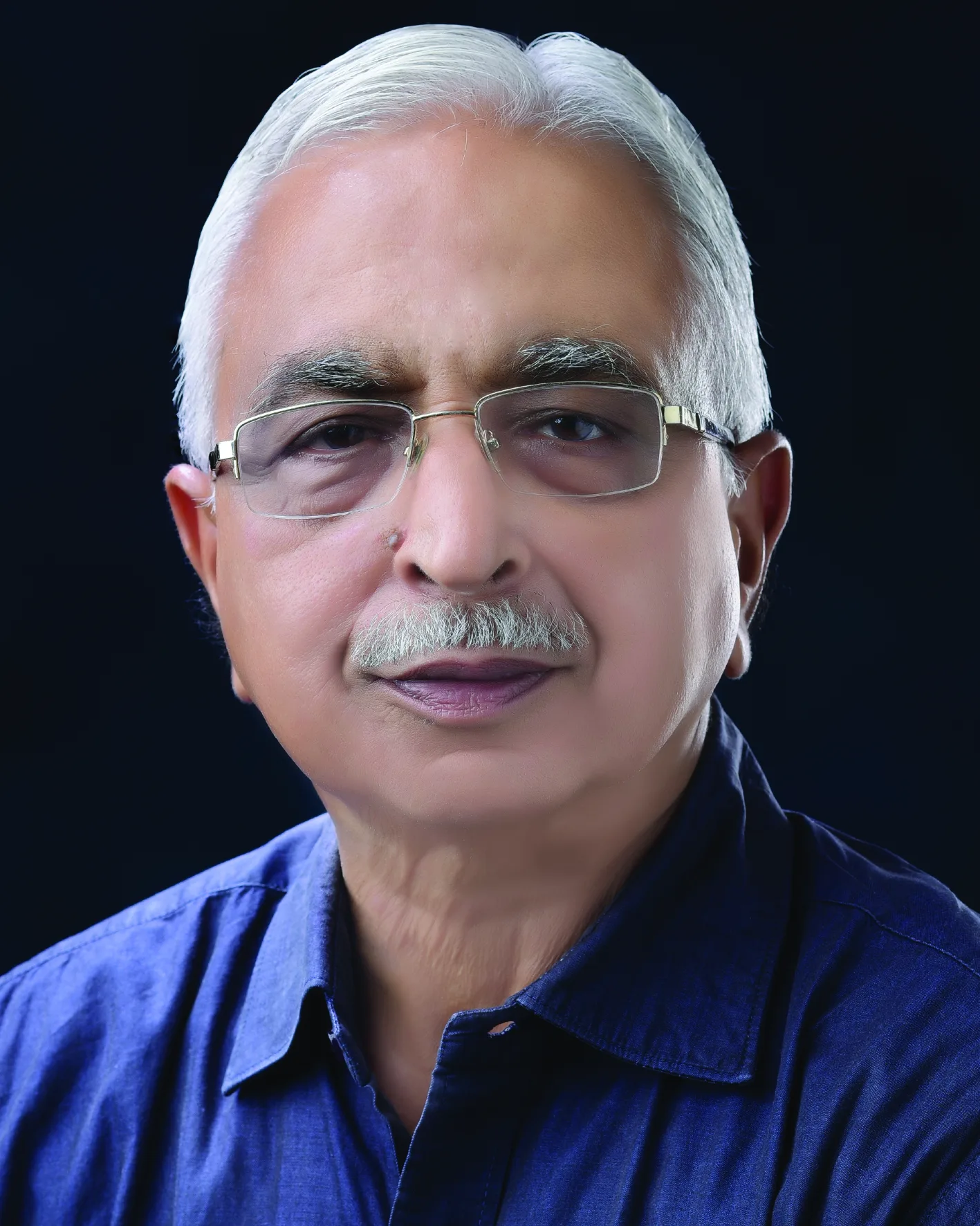
K. V. Rajasekharan (9497450866)