No products in the cart.
 Add Kesari Weekly as a preferred source on Google


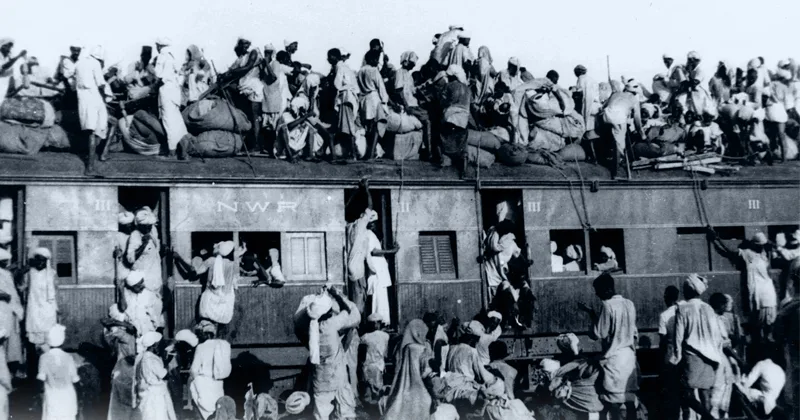
August 14: Partition Horrors Remembrance Day
Governor: Please try to understand!
Comrades, Comrades and Communalists are concerned! Observation of ‘Partition Horrors Remembrance Day’ may expose them!
It was on August 14, 2021, that Prime Minister Narendra Modi announced that in the coming years, “August 14” would be observed as Partition Horrors Remembrance Day (Vibhajan Vibhishika Smriti Diwas) and called upon the nation to commemorate it in that manner.
“The pains of partition can never be forgotten. Millions of our sisters and brothers were displaced from their places due to senseless hatred and violence; many lost their lives. In remembrance of the struggles and sacrifices of our people, August 14 will be observed as Partition Horrors Remembrance Day. Let this day remind us of the need to remove the poison of social divisions and disharmony and further strengthen social harmony, unity, and humanity.” That was the Prime Minister’s appeal.

Following his call, in 2022 the University Grants Commission requested all higher education institutions to observe “Partition Horrors Remembrance Day.” Several institutions—including Kashmir University and Jamia Millia Islamia in Delhi—organized various events highlighting the suffering and hardship of millions of victims during partition.
However, in Kerala, when Governor Sri Rajendra Vishwanath Arlekar instructed educational institutions to observe the day appropriately, left-wing and right-wing communal fronts expressed discontent. Why could that be?
1) Perhaps they believe opposing such a remembrance helps them politically retain the “Pakistan within India” alongside them. The constituent parties of the anti-Hindu, anti-national political front I.N.D.I.A.—the Sonia-led Congress and the jihadi Pinarayi-led Communist Party of India (Marxist)—compete with each other to pay any price for this cause.
2) Communists, who were active in igniting the flames of partition and pouring oil on them, and the Congress Party—which had, by now, become the personal property of Sonia Gandhi, wife of Jawaharlal Nehru’s grandson—both have historical compulsions to justify partition. The communists supported the British–Muslim League agenda behind partition, and Nehru himself sought power even if it meant accepting partition.
Partition Horrors and the Communists
Their strategy—then and now—was to fragment India in as many ways as possible: on the basis of boundaries, languages, commercial and industrial interests, river-water disputes, religions, or the sharing of natural resources. Their tactic was to maximize conflicts and wars, pour fuel on fires, and under the banner of class struggle, instigate bloodshed in every divided country, toppling governments wherever possible. With the help of Stalin’s Soviet Communist fascist regime, they aimed to seize each small warring state one by one—applying the same destructive political tricks now discussed worldwide under “wokeism.”
The Communist Party in India had already devised this devious plan to capture the country, calculating they could achieve it with Soviet economic and other support. It is not that they might not have recognized that if this happened, Russian imperialism would replace British imperialism. But communists who found pride in becoming spies for Russia and then China, were fine with it.
The Communists, were quite content with partition and with the continued Kashmir conflict. They probably saw the rivers of blood during partition as a playground for their political games. History students should note that Pakistan, recognizing the treacherous, opportunistic nature of such forces, neither encouraged the Communist Party of Pakistan nor gave them space—sometimes driving them away by force.
Given this background, it’s unsurprising that jihadi communists cannot stomach the nation commemorating the victims of partition.
Partition Horrors and the Congress Party
When the Muslim League’s demand for partition was accepted, the British—who until then had used a “divide and rule” strategy—may have had certain ambitions. They left India only because, after World War II, they lacked the strength to maintain control here.
They had suppressed the Quit India movement brutally. But the Royal Indian Navy mutiny in Bombay revealed the potential of a large military force—battle-hardened in World War II under both the Indian National Army of Subhas Chandra Bose and the British Indian Army—joining India’s freedom struggle. This raised fears in Britain of a repeat of the 1857 rebellion, compelling them to transfer power, as later acknowledged by British PM Clement Attlee.
In that context, the British may have planned to keep the possibility of a future return alive after regaining resources and strength. This could explain why, during the transfer of power, they granted over 600 princely states the right to join India, Pakistan, or remain independent. A fragmented India would suit both their and the Soviet Communists’ geopolitical designs—though Sardar Patel’s rapid integration of princely states dashed those hopes.
It was on this basis that the British agreed to partition India under Jawaharlal Nehru’s Congress and Muhammad Ali Jinnah’s Muslim League. Nehru who had opposed the Quit India resolution from within the Congress and joined with the Muslim League which opposed the movement wholeheartedly, were chosen by British colonial powers for extending rewards! By ignoring Dr. B. R. Ambedkar’s proposal to ensure an orderly and peaceful population exchange and by looking the other way when the horrors of partition unfolded, Lord Mountbatten, (though he was the Governor-General) revealed the true British agenda.
Given that Congress, Nehru, and their allies had also failed to protect Hindus during the Malabar Khilafat massacres, the Direct Action Day killings, and other pogroms, it’s no surprise they failed to act humanely during partition. Nehru’s eagerness to sign agreements with Liaquat Ali Khan even at that time is well documented.
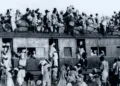
Millions were displaced; hundreds of thousands were killed; looting and mass rapes occurred. What is wrong in setting aside a day to pay tribute to these victims—whether in India or Pakistan? Doesn’t such remembrance send a message to avoid repeating those mistakes?
Christians worldwide kneel in remembrance on Good Friday for Jesus Christ, crucified by Jews, without causing conflicts between Jews and Christians or between the U.S. and Israel. Communists and Congressmen, who every January 30 attack the Hindu community because Godse killed Gandhi, demand that partition horrors be erased from history.
Do annual commemorations of October 31, the day Indira Gandhi was assassinated by Khalistanis, lead to anti-Sikh riots every year? Does observing Rajiv Gandhi’s assassination day as a remembrance cause hatred toward Sri Lankan Tamils? Marxists, who have turned the commemoration of every “martyr” into a profitable industry by building memorials across the state—even for those they themselves may have killed—have no right to oppose Partition Horrors Remembrance Day.
In his August 15, 2021 Independence Day address, PM Modi said:
“While we celebrate our independence today, we cannot forget the pain of partition that still pierces the hearts of all Indians. This was one of the greatest tragedies of the last century. After independence, we quickly forgot these people. Yesterday, India took an emotional decision to remember them. From now on, August 14 will be observed as Partition Horrors Remembrance Day in memory of all the victims of partition—those subjected to inhuman conditions, those who suffered atrocities, and those who did not even receive a dignified cremation. They must live on forever in our memory. The decision to observe Partition Horrors Remembrance Day during the 75th Independence Day is a fitting tribute from every Indian to them.”
This message is relevant not only to India, but also to Pakistan and Bangladesh.