No products in the cart.

 Add Kesari Weekly as a preferred source on Google



Author is the committee member of Bharathiya Vichara Kendram, Changancherry sthaneeya Samithi and former committee member of UVAS/ABRSM
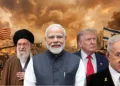
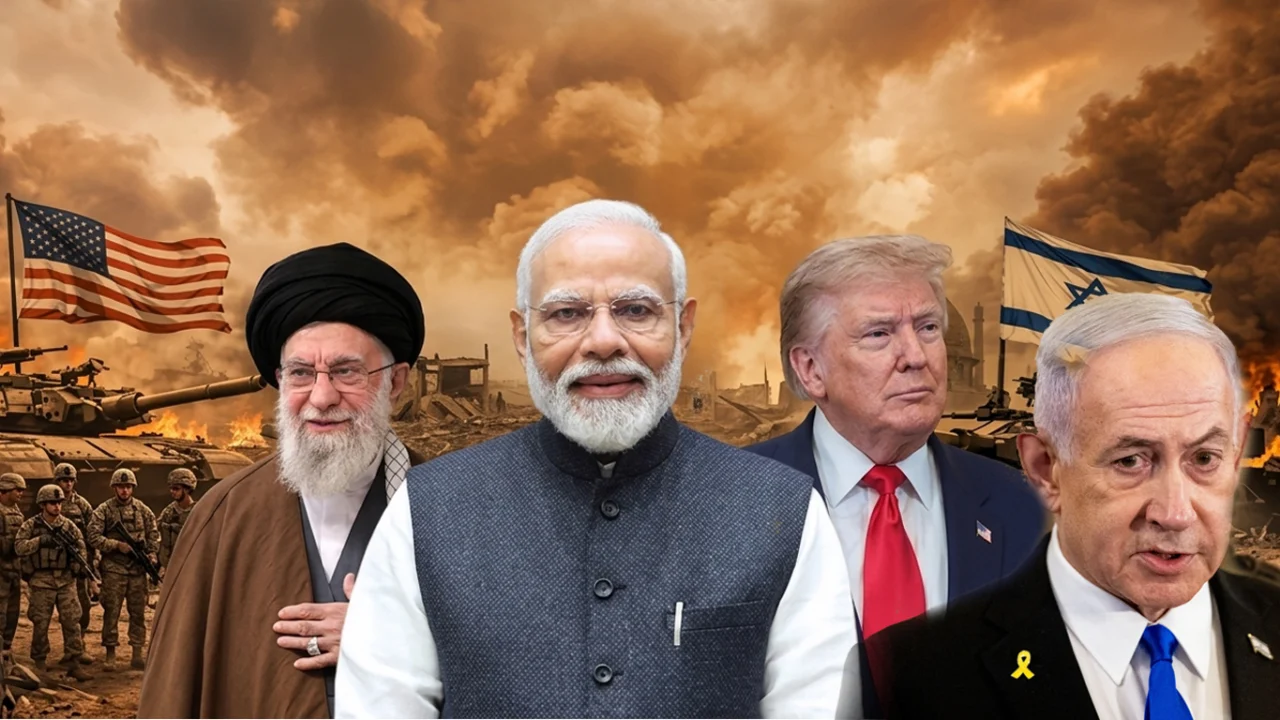
The recent joint military operation by the United States and Israel against Iran, termed as Operation Roaring Lion and Operation Epic Fury, has sent shockwaves throughout the world. The strikes, which began on February 28, 2026, aimed at eliminating Iran’s nuclear capabilities and military infrastructure. They ultimately led to the reported death of Supreme Leader Ayatollah Ali Khamenei. Many people think especially form the opposition and other vested interests that India’s response to these game-changing events has been very ambiguous. The opposition also made a critical point that centre’s response to the war being waged against Iran which has been a loyal “friend” and has been a betrayal of India’s values, principles and interests. However, the Ministry of External Affairs (MEA) made a careful statement showing “deep concern,” asking for “restraint,” and calling for a return to “dialogue and diplomacy.”
A common narrative from opposition parties and some strategic analysts in India is that the country has not honoured a “civilizational friend” and has put its own energy and security interests on hold by not clearly condemning the US and Israel’s joint attack. But a closer examination shows that India’s measured response is not a sign of weakness or uncertainty. On the other hand, it is the clearest example of Strategic Autonomy: refusing to allow India’s foreign policy be moulded by the past or the pressures of the present. The argument that India should condemn the US-Israeli strikes is usually based on two things: Iran’s historical posture on Kashmir issue and its role as a major energy supplier.
When looked at in light of modern reality, both of these arguments

are fundamentally weak. When we trace the myth of Kashmir issue critics argue that Iran has always supported India on the Kashmir issue. However, Iran’s real stance has been one of opportunistic “Islamic solidarity.” After Article 370 was abrogated in 2019, the late Supreme Leader Khamenei publicly criticized India, calling for a “just policy” for the people of Kashmir and comparing the situation to other conflicts in the Muslim world. Tehran has used the Kashmir issue as a way to show that it is a strong leader in the Ummah, even if it means hurting India’s sovereignty. It is a strategic mistake to say that India should abandon its ties with Israel for a partner that always threatens its territorial integrity.
The Energy misconception among opposition parties and critics is that India is highly dependent on Iranian oil. This is no longer relevant. In 2025, India successfully diversified its energy basket after “snapback” sanctions were imposed and tensions in the region grew. As of March 2026, India gets most of its crude oil needs from Iraq, Saudi Arabia, the UAE, and Russia. To deal with the unstable situation in the West Asia, India has recently made important LNG and uranium deals with Canada and Australia. More than that the Minister for Petroleum and Natural Gas, Hardeep Singh Puri stated that there is no shortage of energy in India and no reason for people to worry amid geo-political tensions in West Asia.
The IRGC’s (Islamic Revolutionary Guard Corps), part of Iranian armed forces, decision to close the Strait of Hormuz on March 5, 2026, will definitely make prices around the world go up. However, Iran’s recent statement that it will allow non-Western ships through the Strait of Hormuz shows that India’s “measured response” has already paid off.
Besides, the safety of almost 40,000 Indians living in Israel at risk. The Indian government is responsible first and foremost to its own people. There are more than 9 million Indians working in the Gulf. If New Delhi had remarked anything provocative, host countries could have taken action or there could have been civil unrest. Also, the Union Ministry of Home Affairs has already warned of “ripple effects” at home, in terms of possible violence and sporadic protests in India. A careful official response keeps things calm and prevents international conflict from causing problems at home. The Realistic way forward of India’s response was not against its principles; it was in tune with the most important one: India First.
By not praising the strikes, India kept a line of communication open with Tehran that would make the 10,000 Indians in Iran safe and protected.
In 2026, “strategic autonomy” means staying independent without being neutral. It permits India protect its own interests without giving up its options. Final thoughts- people often desire a “firm stance” because they want to feel good about themselves instead of getting a strategic advantage. If India had condemned the attacks, it would have received a gratitude from a regime in Tehran that was crumbling, but it would have lost a lot of power.
It is also significant here to mention the recent humanitarian response to the Iranian naval vessel exhibits the principle that giving protection in times of distress go beyond political differences. It clearly reflects India’s approach to international events including West Asian crisis remains deeply rooted in compassion, restraint and moral responsibility. In the recent context, India’s political leadership has proactively emphasised on Bharathiya ancient ethos as its core values in international engagements. Vasudhaiva Kudumbakam being projected during India’s global diplomatic endeavours shows the persistence of this world view.