No products in the cart.

 Add Kesari Weekly as a preferred source on Google


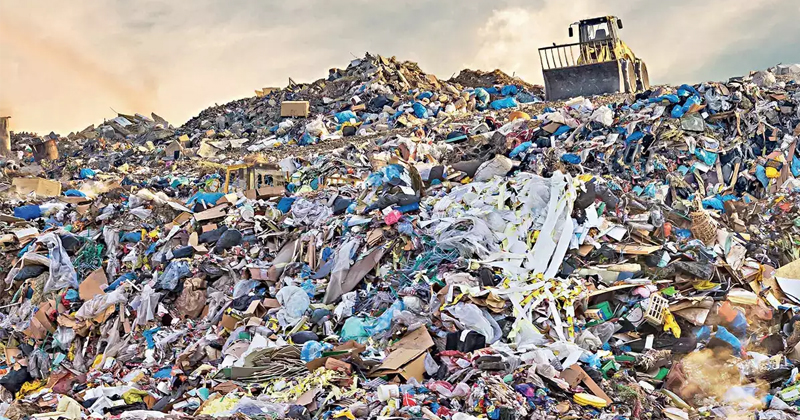
Indians use plastic in a reckless manner. In our everyday life, we use it as though it is a scrap of paper and throw it around- plastic pouches, plastic bags used to carry goods from super markets, plastic milk sachets etc. Hardly any give, even a fleeting thought, that a plastic container is a chain of atoms which are not easily amenable to destruction in the environment, unlike a paper bag, which can easily be burnt to ashes. A recent report by the United Nations Environment Programme (UNEP) released in 2021 estimated that emissions from plastic waste into aquatic ecosystems may triple in another two decades if adequate measures to contain this menace are not promptly and urgently undertaken. It is hoped that UN Environment Assembly, scheduled to meet this month, may finalize an action plan in this regard.
A challenging menace:
Though handy and convenient, plastic containers, be they water bottles or pouches to carry milk or other groceries will not easily decompose if ploughed into the soil. Exponentially increasing global plastic consumption and negligible participation in plastic recycling projects have led India to accumulate more and more plastic waste. Inasmuch as marine life is concerned, which is very essential for human existence via the food chain, the social costs must be factored in the larger picture.

Plastics represent a typical example of a “consumption externality” involving millions of Indians, rather than a “production externality” which involves one or many firms. However, the former is far more difficult to address, as it is quite difficult to differentiate the behaviour pattern of consumers. For instance, in one case the consumer might simply throw away, from a speeding car, an empty plastic bottle onto the road while a more conscious one might carry it home to arrange a safe disposal. Imposing the cost of the harm to the environment on all consumers uniformly will not yield efficient solutions. And, as the number of consumers in India run into millions, the cost of controlling them also runs into a huge price.
Containing plastic menace – the modus operandi:
A number of countries across the world have totally banned use of plastics. This approach promotes sustainable development, inter-generational equity and saves marine and wild life ecosystems. This will also restore soil quality. But, this also causes inconvenience to consumers, enhances substitution cost, and also will create unemployment shocks to those engaged in plastic industry. The replacement of plastics, which are low cost, with substitutes results in deadweight loss to the economy.
Other key aspects which may be considered for global cooperation are the options if the plastics are banned, the effectiveness of imposing tax and the potential problems with both of these approaches. It is difficult to identify the exact tax rate to be imposed, which will, of course, depend on country-specific situations. The environment regulation for plastic use must include a “command and control” approach, and, fiscal reforms like “eco taxes” or subsidies. The efficiency of such a regulation depends on its architecture – how well it is planned, designed and executed. It should be credible, transparent and predictable. A tax rate, specifically, needs to be carefully calibrated and, without doubt, work as a deterrent. In general, the tax rate on plastics must be higher than the cost of compliance.
Eco taxes may be imposed in the various stages of production, consumption, or plastic disposal. Pollution during plastic production is certain to take place, hence, the manufacturer must be taxed on using polluting inputs. This will, inevitably, require polluters or pollution controlling authority to install meters to record emission of the effluent discharged during plastic production.
How to estimate social cost?:
Social cost should be evaluated differently in the local/regional and global contexts. While health and hygiene are the predominant considerations in the former, climate change is important in the latter case. Ideally, eco tax rates on plastics ought to be equal to the marginal social cost arising from the “negative externality”, associated with the production, consumption or disposal of goods and services. This requires evaluation of the damage to the environment based on scientific assessment of the adverse impacts on health, hygiene and environment. The eco tax rate on plastics may thus be fixed commensurate with the marginal social cost so evaluated.
In Conclusion:
In conclusion, it may be said that comprehensive measures to contain the plastic menace may generally involve the following complementary activities:
1. The removal of existing taxes and subsidies that have a negative impact on the environment
2. Taking into account the different types and grades of plastics
3. Restructuring existing tax rates in an environmentally friendly manner
Additionally, as effective policy solutions to contain the plastic menace, promoting multiple use of plastics through better waste management, educating the public on the harmful effects of indiscriminate plastic use and thoughtless disposal, providing governmental subsidies for research and development for appropriate substitutes, appropriate waste disposal mechanisms, and, use of waste for constructive activities such as road laying must be considered.
The author is formerly Professor, National Science Foundation, The Royal Society, Belgium, and can be reached at [email protected]