No products in the cart.

 Add Kesari Weekly as a preferred source on Google



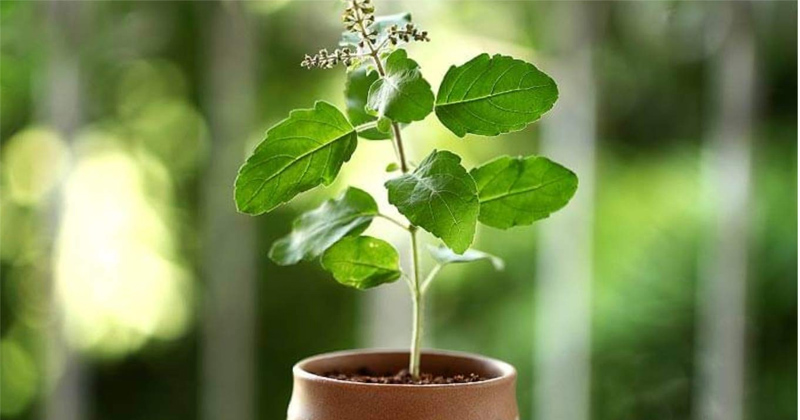
How many of us really know the value of Tulasi? All that we think is that it is a sacred plant and used only for worship in the Hindu temples and at home. Almost all devout malayalees cannot think beyond this. But, Tulasi is an exceptionally valuable plant inasmuch as human nutrition is concerned, when it comes to its seeds. Let us examine the details below.
To start with, a nutritious and cost-effective substitute for eggs for cake baking, breads and biscuits, just a spoonful of Tulasi seeds is enough for a fluffy cake batter. In north India, the Tulasi seeds are called Sabja and are used in north Indian homes, put in tea, to treat sore throat and running nose. Tulasi herb comes under the genus Ocimum. Its botanical name is Ocimum sanctum and comes under the family Labiatae. The word “sanctum” means sacred. The genus Ocimum has over 150 species spread across the world. In Tulasi we have both Rama Tulasi and Krishna Tulasi, which are sacred for use in temples and homes.
For seed purposes, Ocimum basilicum (also from the genus Ocimum like Tulasi) is preferred as the plant gives more seeds. In recent years the seeds have become very popular among people looking to eat healthy food, especially in north India and Karnataka. The small black seeds (see picture enclosed) become mucilaginous (gain a gelatinous consistency) when soaked in water and consumed, are said to help reduce body weight, help patients suffering from constipation and acidity, ad also manage diabetes. The mucilage is rich in dietary fibre such as the polysaccharides glucomannan and xylan which make one feel satiated after a long time. An investigation published in the science journal Bioactive Carbohydrates and Dietary Fibre of May 2021 issue esablishes that the fibre accounts for 98.50% of this mucilage.

As the hydrated seeds do not have a strong flavour or taste, they can be easily added to smoothies (a sweet milk/fruit based drinks), fruit juices and milkshakes. They have been used as a replacement for fats in sponge cakes by researchers of the department of Food and Nutrition, Korea University in Seoul. In 2017 an investigation reported in the Italian Journal of Food Science, the researchers report that 1 gram of seeds can replace 15 grams of butter.
Non hydrated seeds are also edible. In 2020 an investigation reported in the science journal Current Research in Nutrition and Food Science, researchers from the Department of Nutrition and Dietetics at Periyar University, Salem, in Tamil Nadu, showed that using roasted Tulasi seeds in idli batter made the idlis more healthier and suitable for diabetic patients.
The seeds are used in traditional recipes too. A nutritious pak (betel leaf) or burfi or mysore pak is made by turning the seeds into flour and mixing them with ingredients such as almond , khoya, Bengal gram flour, black pepper, crystal sugar and ghee. This sweet can be eaten every morning on an empty stomach with milk for good nutrition.
Water Conserving Plant
One of the most important constraints in Indian agriculture is the availability of water for irrigating field crops. Tulasi is a water-conserving plant, or, “water-smart” crop. The increasing popularity of Tulasi, for its stems, leaves and seeds, more in north India than in Kerala, has attracted many farmers to take to its cultivation on a large scale. It can be successfully grown in water-starved (rainfed) areas. In fact, water stress, along with high and low temperatures increase the essential oil content of the Tulasi seeds.
Jagdeesh Chaudhary, an educationist and the Director of Balaji Institute which runs colleges in Faridabad in Haryana State, is passionate about water conservation and often uses his fields to demonstrate to farmers that they can shift to Tulasi for higher profits. Based on his practical experience with the Tulasi crop, he says hat a farmer who cultivates it organically (without using any chemical fertilizers) can earn at least Rs 4 lakhs per year from 0.4 hectares as opposed to Rs. 50, 000 which the farmers earn from conventional crops like rice or wheat.
The Tulasi seeds are not just used in cooking. They yield an essential oil which has antimicrobial properties and inhibits the growth of yeasts and fungi on the skin. For instance, the essential oil from Tulasi inhibits the germ tube formation in the yeast Candida albicans which causes infections in humans and prevents their growth, according to an investigation published in the science journal Industrial Crops and Products.
In recent years, there have also been extensive investigations on the Tulasi mucilage to examine if the same could help develop materials which can be used in personal care products, cosmetics, medicines and in agriculture.
In Palakkad the dry district of Kerala, the commercial cultivation of Tulasi can be tried, if the industrial infrastructure is established, especially to extract the mucilage and also the essential oil from its seeds.
Since Tulasi grows profusely, the Central Institute of Medicinal and Aromatic Plants in Lucknow, Uttar Pradesh, has developed hybrids which give diverse fragrances and flavours such as that of paan (beeda), lavender, lemon and cardamom. Many of the Ocimum species already have flavors similar to some of the other herbs. For example, Thai Tulasi has an anise-like fragrance, while African basil has a strong camphor-like smell. These hybrids serve as cheap substitutes in the food industry, thus paving the way as good nutraceuticals.